Theme 1
This theme has two main goals: to explore peptide-oligonucleotide conjugates, and to improve key aspects of the oligonucleotide synthesis workflow, focusing initially on the protecting groups and solvents employed.
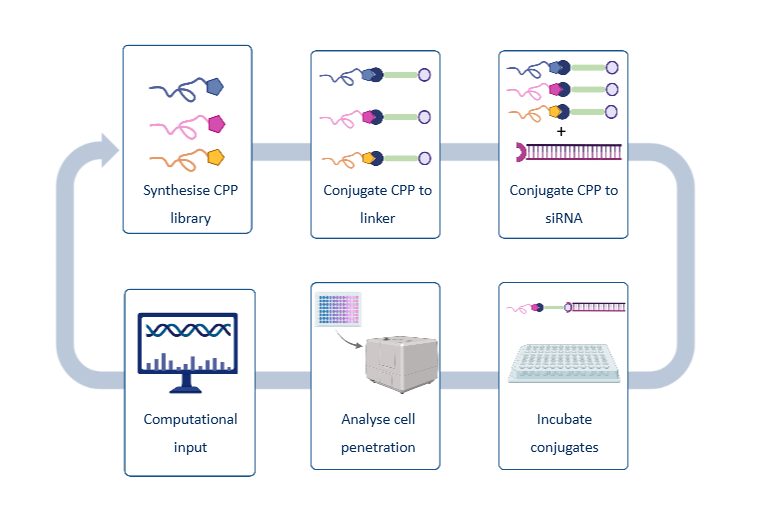
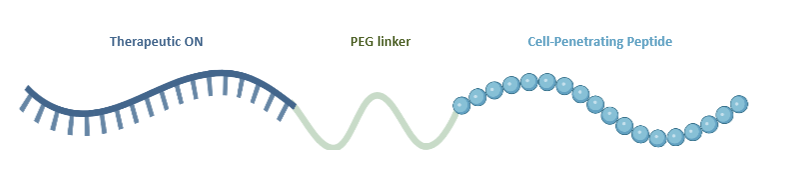
Theme 1.1 A direct-to-biology screening platform to enable high-throughput synthesis and screening of oligonucleotide-cell penetrating peptide (ON-CPP) conjugates.
Theme 1.2 Towards greener solvents through mechanistic understanding
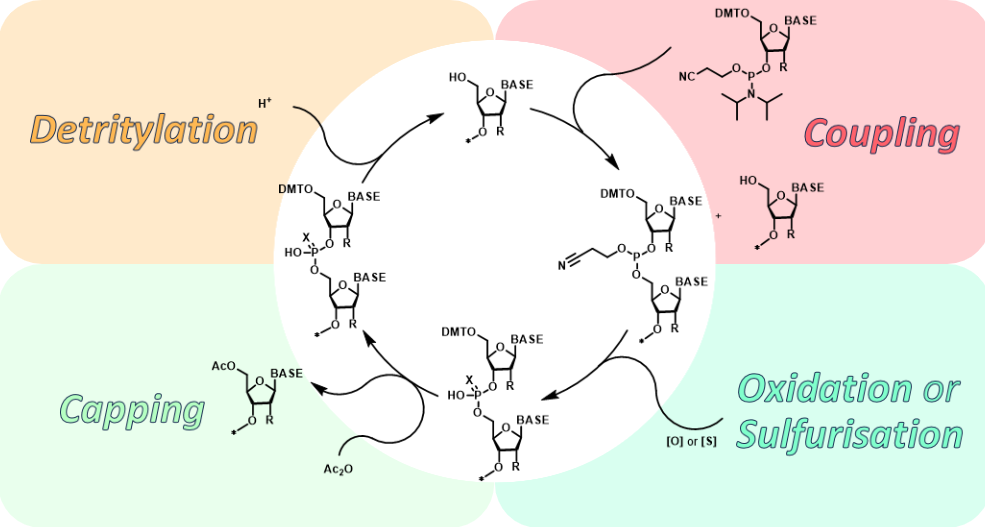
Initial investigations are focusing on phosphoramidite coupling kinetics. Work includes studying the rate of reaction between A-, G-, C- and U-containing 2’-fluorinated phosphoramidites and activators DCI, ETT and BTT by 19F NMR spectroscopy. A method to monitor the coupling reaction by in situ IR spectroscopy is being developed.
Assay development is also ongoing to identify coupling conditions that allow observation of the reaction progress at synthetically relevant concentrations with the addition of a desiccant to remove competing water from the reaction mixture. Suitable model nucleophiles are being explored as surrogates for solid-supported sugars.
Theme 1.3 Alternative 5′ protecting groups with enhanced atom economy
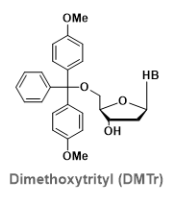
Lower molecular weight alternatives to the ubiquitous 5′ DMTr protecting group are being investigated. Current work is focusing on stability against the common activators used in the coupling step of oligonucleotide synthesis, with future endeavours planned to explore all steps in the ON synthetic sequence. Both solution and solid phase systems are being explored. Alongside this, kinetic studies will be carried out on the deprotection of these alternative protecting groups.